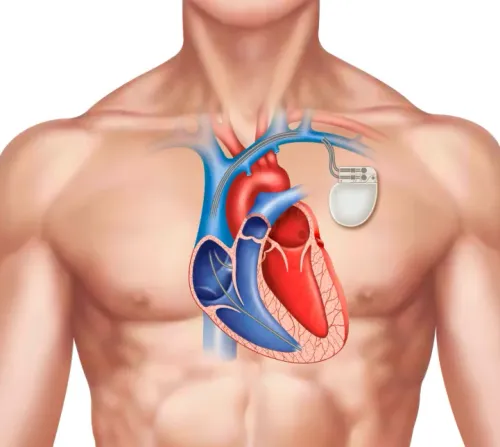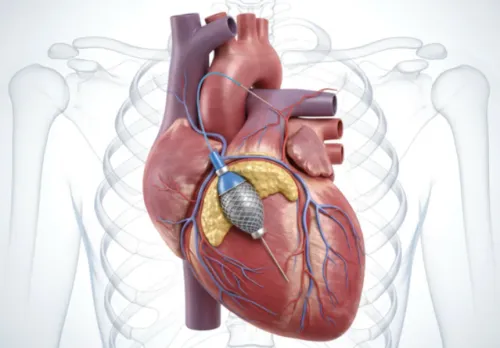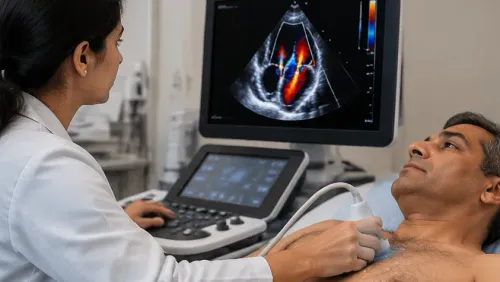
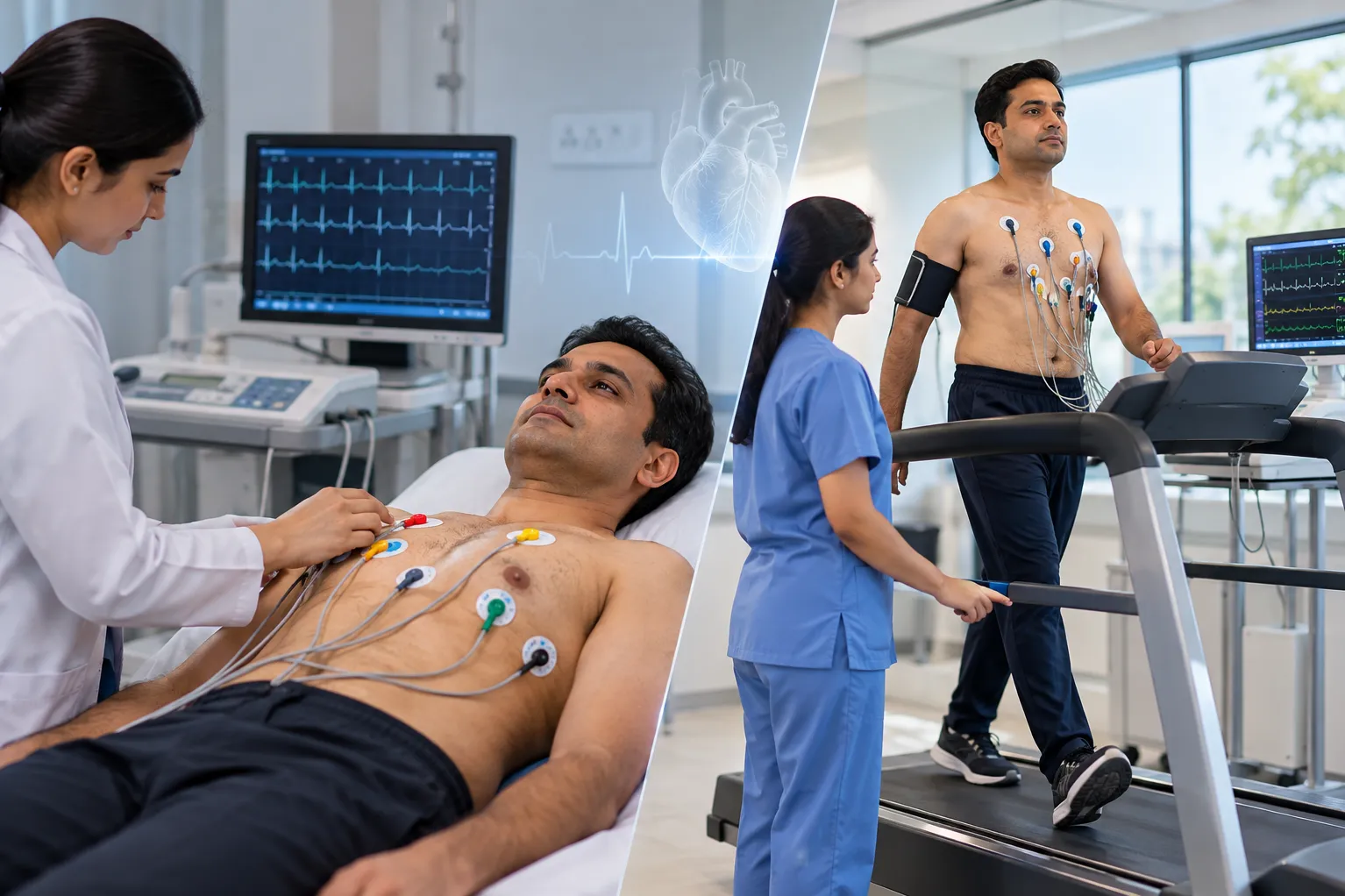
An ECG and a TMT stress test both record the heart’s electrical activity, but they answer different clinical questions. A resting ECG provides information while the patient is lying down, whereas a treadmill test observes how the heart responds to progressively increasing physical effort.
Understanding this distinction can help patients avoid expecting one investigation to replace the other.
When a Resting ECG May Be the Starting Point
A standard ECG is commonly used to assess:
- Heart rate and rhythm
- Electrical conduction
- Persistent rhythm abnormalities
- Possible changes related to heart-muscle injury
- Certain patterns of chamber strain
- Effects of selected medicines
Because it records only a brief period, a normal resting ECG does not necessarily explain symptoms that occur only during exertion.
When a TMT May Add Useful Information
A treadmill test may be considered when a person experiences chest discomfort or unusual breathlessness during walking, climbing stairs, or exercise. It may also help evaluate exercise tolerance in selected patients or support planning for safe physical activity.
During the test, electrodes remain attached to the chest while the treadmill’s speed and incline gradually increase. Heart rhythm, ECG changes, blood pressure, symptoms, and exercise capacity are monitored.
The test may be stopped when the required target is achieved or if the patient develops concerning symptoms, significant ECG changes, an abnormal blood pressure response, or excessive fatigue.
Who May Not Be Suitable for a Routine TMT?
A TMT is not appropriate for every patient. The cardiologist may advise a different test when the person:
- Cannot walk safely on a treadmill
- Has particular abnormalities on the resting ECG
- Has an acute or unstable medical condition
- Has severe uncontrolled blood pressure
- Has certain significant valve conditions
- Requires an imaging-based stress assessment
- Has symptoms that demand urgent evaluation
Medicines can influence heart rate and test interpretation. Patients should not stop beta blockers or other cardiac medicines on their own. Any medication adjustment must come from the treating doctor.
Preparing for the Test
The clinic may provide individual instructions, but preparation can include:
- Wearing comfortable clothing and walking shoes
- Avoiding a heavy meal shortly before testing
- Carrying current prescriptions and earlier cardiac reports
- Informing the team about joint pain, breathing problems, or mobility limitations
- Reporting chest pain or illness present on the day of testing
- Following instructions about caffeine, smoking, and medicines
Patients should not attempt to “perform well” by hiding symptoms. Reporting chest discomfort, dizziness, breathlessness, or leg fatigue allows the medical team to interpret the test safely.
What Does a Positive or Negative Result Mean?
A test described as positive may show changes suggesting that further evaluation is necessary. It does not, by itself, define the exact number or severity of coronary blockages.
A negative test may be reassuring in the appropriate context, but it does not exclude every possible cardiac problem. Exercise level achieved, symptoms, ECG quality, risk factors, and pre-test probability all affect interpretation.
Heart Beat Super Speciality Clinic can help patients from Wakad and Pune determine whether a resting ECG, TMT, echocardiogram, Holter monitor, or another investigation is suitable. Choosing the right test begins with the clinical question not simply selecting the most extensive option.
Keywords